2026-10-07 · Leilani Kamaka
Clearing Salt Buildup on AC Coils Near the Kailua-Kona Shoreline
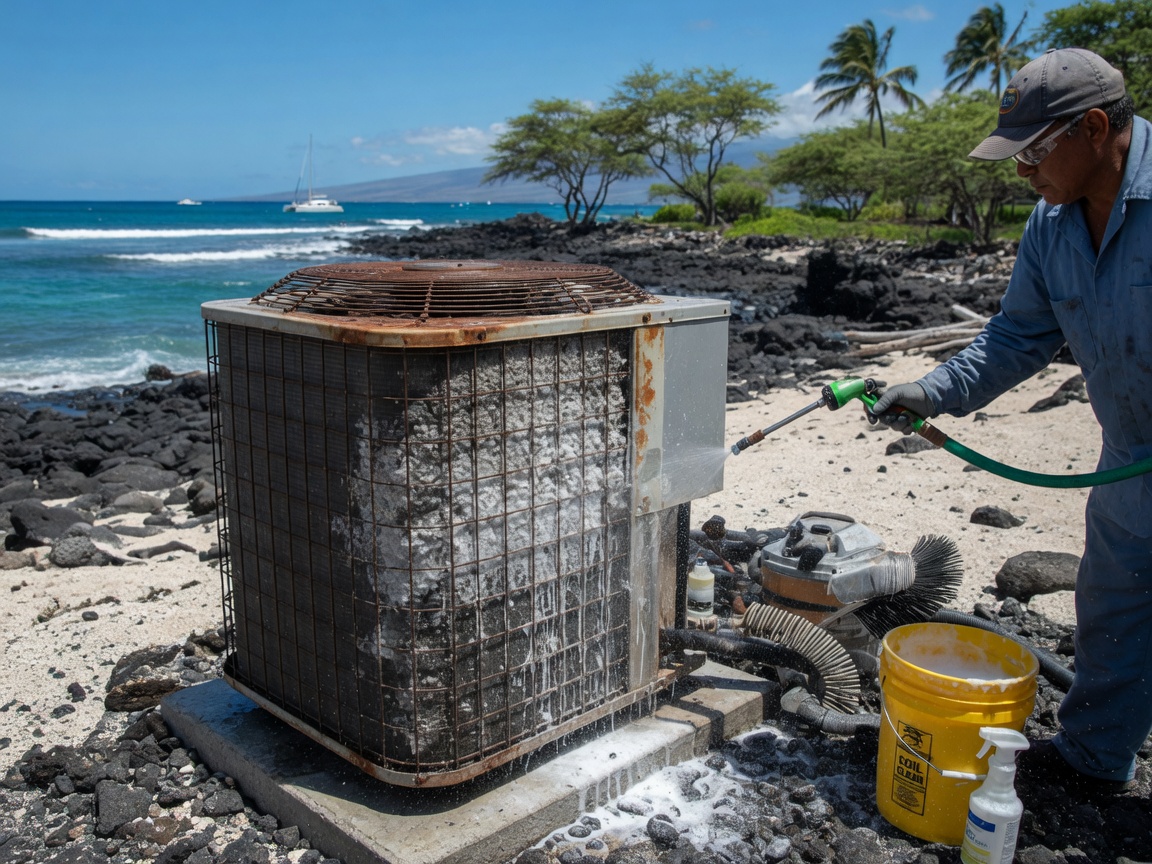
Clearing salt buildup on AC coils near the Kailua-Kona shoreline begins with a low-pressure freshwater rinse every four to six weeks when trade winds pick up. This removes the white crust that forms on aluminum fins from sea spray carried inland past Kailua Pier and Magic Sands Beach. In the tropical leeward conditions of Hawaii County, where sunny days alternate with light showers, the salt dries fast and restricts airflow within weeks rather than months.
Why Salt Accumulates Faster Near the Shoreline
Homes in Keahole and along the coast face constant exposure to salt-laden air that settles on outdoor condenser coils and indoor evaporator coils. The leeward coast receives less rain than windward sides, so deposits stay longer and combine with fine dust from nearby roads. This mix reduces heat transfer, raises energy use, and shortens compressor life in units serving older single-wall construction common in Kailua Village. Vog from distant eruptions adds another layer that mixes with the salt and clings even tighter during calm periods. What vog does to AC filters and airflow on the Kona Coast explains the combined effect on airflow in detail.
Preparing for a Safe Coil Rinse
Turn off power at the disconnect before any work. Gather a garden hose with a gentle spray nozzle, a coil cleaner labeled for aluminum, soft brushes, and distilled water for final rinse. Wear eye protection because dried salt can flake into the air. Position a catch pan beneath the unit to keep runoff from staining concrete pads common in Holualoa yards. Check the area around the unit for kiawe roots or loose soil that could shift when you move the unit slightly for better access to the rear coil face.
Detailed Cleaning Steps for Coastal Units
Spray coils from the inside out with plain water first to loosen loose salt. Apply the cleaner in a light coat and let it dwell five minutes without drying. Rinse thoroughly with low pressure, working top to bottom so debris falls away from the fins. Repeat on the evaporator coil after removing the access panel inside the air handler, usually located in a closet or attic space. Dry the area with a shop vac on exhaust before restoring power. This process typically takes 45 minutes on a 3-ton unit serving a 1,200-square-foot home.
Preventing Future Buildup with Routine Care
Install a washable pre-filter on the return side and change it monthly during peak salt season. Schedule AC maintenance twice a year so a technician can apply protective coatings and verify drain lines remain clear in the humid Kona climate. Keep vegetation trimmed at least two feet from the condenser to maintain airflow. In Keahole homes with metal roofs, check that condensate lines route away from the unit base so standing water does not splash additional salt upward. How humidity spikes during Kona's rainy months affect AC performance shows why consistent airflow matters most when moisture levels rise.
Signs Professional Help Is Needed
If fins remain bent after rinsing or the unit still runs longer than usual, contact a technician for AC repair. Persistent high humidity inside despite clean coils points to a refrigerant issue or oversized system common in older Kailua Village stock. Technicians at 74-5552 Kaiwi St Ste G7-6 can inspect for corrosion on copper lines that salt accelerates. Call 24/7 when the system fails to cool below 78 degrees on a typical 85-degree Kona afternoon.